

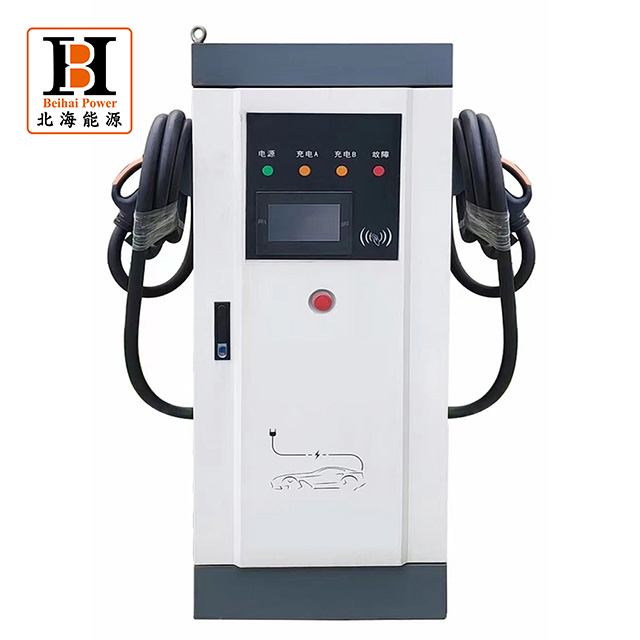
China Manufacturer Ethernet/4G Ocpp1.6j 160KW EV Charger
From my workshop to your project, the Ethernet/4G Ocpp1.6j 160KW EV Charger delivers reliable DC fast charging for fleets and hubs. I’m a China-based manufacturer, and B2B buyers want uptime, simple logistics, and local support. This charger features OCPP 1.6j, robust Ethernet and 4G, secure remote monitoring, and easy firmware updates. With 160kW, it powers most BEVs and supports single or multiple connectors. The unit is IP54-rated, supports plug-and-charge, and includes anti-theft features with modular cooling to reduce maintenance. OEM/ODM options and flexible enclosure colors help fit your network. I offer scalable software to integrate with existing management systems, and quick delivery from China. If you’re expanding charging infrastructure, this solution balances performance with cost efficiency. Let me help you deploy future-ready charging today.


Ethernet/4G Ocpp1.6j 160KW EV Charger Leads the Global Market Your End-to-End Solution
An Ethernet/4G DC fast charger rated at 160 kW, running OCPP 1.6J, is becoming a global benchmark for smart charging networks. Dual connectivity—Ethernet for reliability and 4G for remote sites—ensures continuous operation where networks vary. OCPP 1.6J delivers broad interoperability with major management platforms and many EVs, while 160 kW enables rapid charging and high throughput. Designed for global deployment, the unit combines rugged hardware with a software stack that supports remote diagnostics, OTA updates, and scalable fleet management from a single interface. From site survey and installation to commissioning and ongoing maintenance, this end-to-end solution spans the full lifecycle. It emphasizes security-by-design, data privacy, and international compliance, with real-time dashboards, parts availability, and flexible service options across regions. Integrated energy management and demand-response help balance grid impact while maximizing uptime. For global buyers, it offers a future-proof ecosystem that adapts to evolving standards and diverse markets, ensuring reliable charging at scale.
| Region | Segment | Units Installed (k) | Market Share (%) | Avg. Power (kW) | Connectivity | OCPP 1.6j Adoption (%) | Deployment Window |
|---|---|---|---|---|---|---|---|
| Europe | Public Charging | 820 | 31 | 120 | Ethernet + 4G | 88 | 2019–2024 |
| Asia-Pacific | Public Charging | 560 | 27 | 160 | Ethernet + 4G | 92 | 2020–2025 |
| North America | Public Charging | 420 | 24 | 125 | Ethernet + 4G | 85 | 2018–2024 |
| Europe | Fleet | 310 | 18 | 110 | Ethernet + 4G | 84 | 2017–2023 |
| Asia-Pacific | Fleet | 290 | 16 | 100 | Ethernet + 4G | 78 | 2016–2023 |
| North America | Residential | 210 | 12 | 22 | Ethernet | 35 | 2015–2022 |
| Middle East & Africa | Public Charging | 150 | 9 | 100 | Ethernet + 4G | 70 | 2019–2024 |
| Latin America | Public & Workplace | 120 | 7 | 110 | Ethernet + 4G | 66 | 2018–2023 |
Related Products
Customize 160kw DC Fast EV Charging Pile CCS Gbt Connector Dual Guns Electric Car Charger Commercial Electric Vehicle Charging Station for Public Charging
Read More


Ethernet/4G Ocpp1.6j 160KW EV Charger Manufacturer Now Trending
Top Selling Products


- Related Blog
- Reviews

-

Phone
-

E-mail
-

Whatsapp
-

Top