
An electric car charging station is no longer a niche amenity. For commercial property owners, fleet operators, developers, and infrastructure buyers, it has become a practical asset that supports site competitiveness, tenant satisfaction, and operational readiness for the growing electric vehicle market. The best charging installations are not defined by appearance alone; they are defined by electrical design quality, charging speed, load management, safety protection, uptime, and ease of maintenance. For B2B buyers, understanding these technical factors is essential to selecting the right charging solution for long-term use.
This article focuses on the application side of electric car charging station deployment, with an emphasis on system architecture, installation considerations, and performance factors that matter in real commercial environments. Rather than treating charging equipment as a simple accessory, it examines how station design affects energy distribution, user experience, and total site efficiency.
What Defines a Modern Electric Car Charging Station
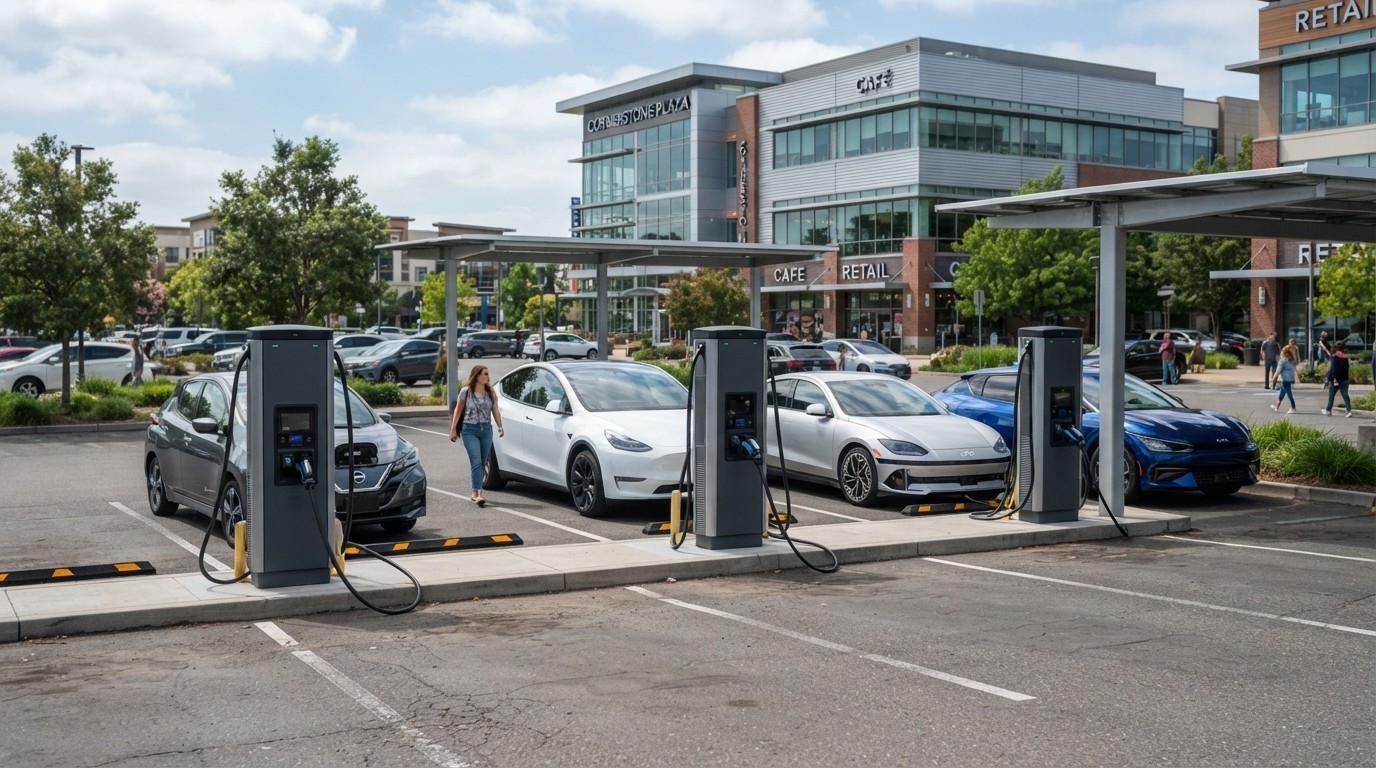
A modern electric car charging station is a coordinated system that transfers electrical energy from a power source to a vehicle battery through controlled charging equipment. Depending on the application, the station may include AC charging points for parking facilities, DC fast charging cabinets for high turnover locations, power conversion modules, metering devices, communication interfaces, cable management hardware, and protective enclosures.
For B2B buyers, the key distinction is not just between slow and fast charging. It is the difference between installations designed for prolonged parking and those intended for high-throughput service. Workplace garages, shopping centers, hospitality properties, logistics depots, and highway service areas each require a different balance of power output, connector type, usage frequency, and electrical infrastructure.
Charging Levels and Their Commercial Use Cases
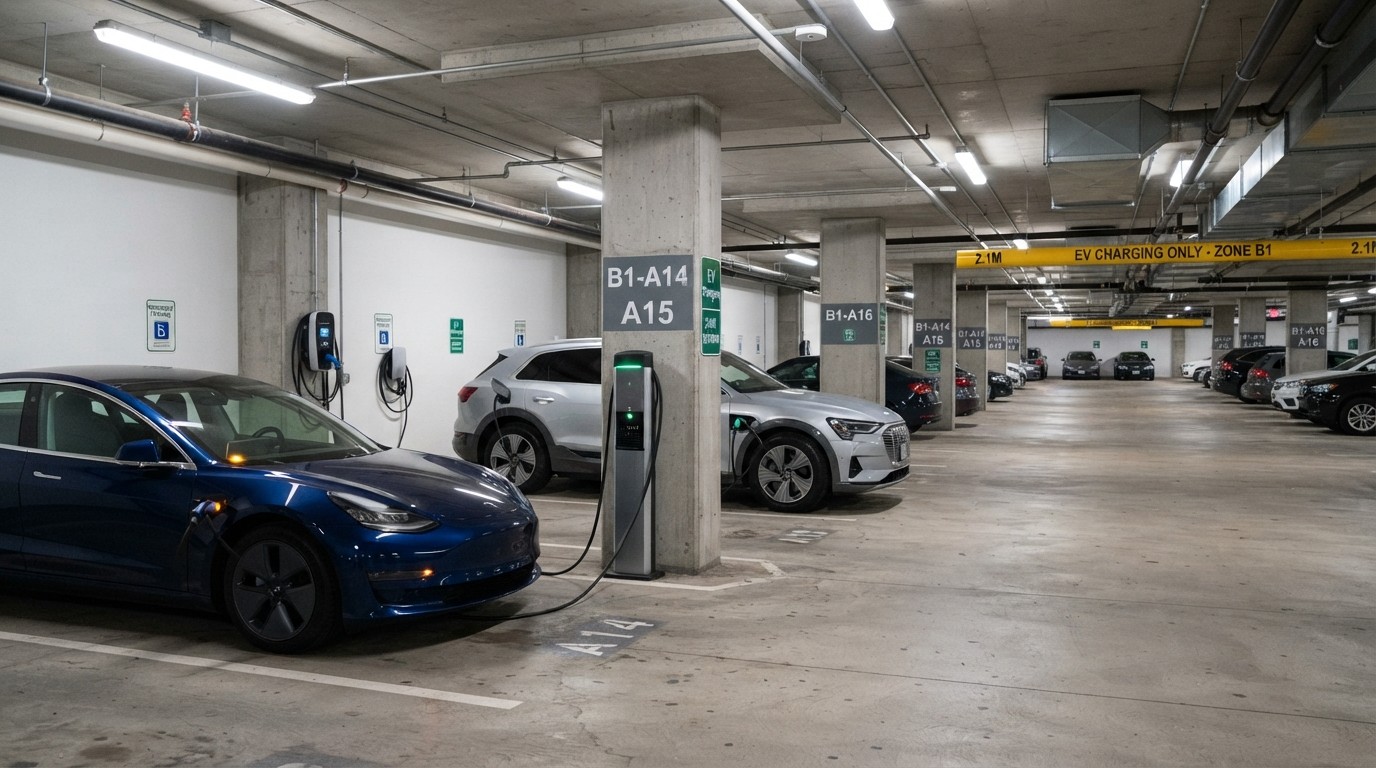
Electric car charging stations are generally deployed in two main categories: AC charging and DC fast charging. AC charging is often used where vehicles remain parked for several hours, such as office campuses, residential complexes, hotels, and public parking structures. In this configuration, the vehicle’s onboard charger converts AC power into DC power for battery storage. The station itself is relatively compact and easier to integrate into existing electrical systems.
DC fast charging is used where turnaround time is critical. In this setup, the charging station converts AC to DC internally and delivers high-power direct current to the vehicle battery. This architecture reduces charging time significantly and is well suited for fleet depots, transit hubs, retail corridors, and long-distance travel locations. However, it requires more substantial grid capacity, thermal design, and power electronics.
Choosing between these charging levels depends on dwell time, site demand profile, and available electrical capacity. A well-planned deployment often combines both types to serve different user groups efficiently.
Core Technical Features Buyers Should Evaluate
When sourcing an electric car charging station, B2B buyers should evaluate the equipment based on measurable technical attributes rather than only on nominal power ratings. Important features include output range, connector compatibility, enclosure rating, cable durability, communication protocols, and load balancing capability.
Power output: The station must match the use case. Lower-output AC stations are sufficient for long-stay parking, while high-output DC systems support rapid turnover. Buyers should confirm that the rated power is sustainable under local ambient conditions and real load cycles, not just peak performance.
Connector support: Compatibility with regional vehicle standards is critical. Commercial installations often need flexible connector configurations to support a mixed vehicle fleet and a broad customer base. Some sites may require universal compatibility through multi-standard connectors or modular cable systems.
Environmental protection: Outdoor charging stations should use enclosures designed for dust, moisture, and temperature variation. The ingress protection rating, corrosion resistance, and UV stability of housing materials matter particularly in coastal, industrial, or high-humidity environments.
Thermal management: High-power charging generates heat in power electronics, cables, and connectors. Effective cooling design, whether forced-air or liquid-based in higher-power units, improves efficiency and extends component life. Poor thermal management can reduce charging output or trigger protective shutdowns.
Smart communication: Network connectivity enables remote monitoring, firmware updates, usage reporting, authentication, and dynamic control. Commercial operators benefit from systems that support backend integration, access control, and energy management software.
Materials and Construction for Long-Term Reliabilit
The reliability of an EV charging station depends heavily on construction materials and assembly quality. Outdoor cabinets are commonly made from coated steel, aluminum alloy, or reinforced thermoplastic materials. Each has advantages depending on the deployment environment. Metal housings offer mechanical strength and structural stability, while high-performance polymers can improve corrosion resistance and reduce weight.
Internal components require careful material selection as well. Busbars, contactors, circuit boards, and wiring must tolerate sustained electrical load and repetitive thermal cycling. Industrial-grade connectors should maintain low contact resistance and mechanical integrity over many plug-in cycles. The charging cable jacket must resist abrasion, flex fatigue, and exposure to oils or cleaning agents.
For stations exposed to public use, vandal resistance and impact protection are also important. Reinforced enclosures, tamper-resistant fasteners, and protected cable routing improve resilience and reduce service interruptions. In high-traffic commercial environments, durability directly affects maintenance intervals and total cost of ownership.
Electrical Infrastructure and Site Planning
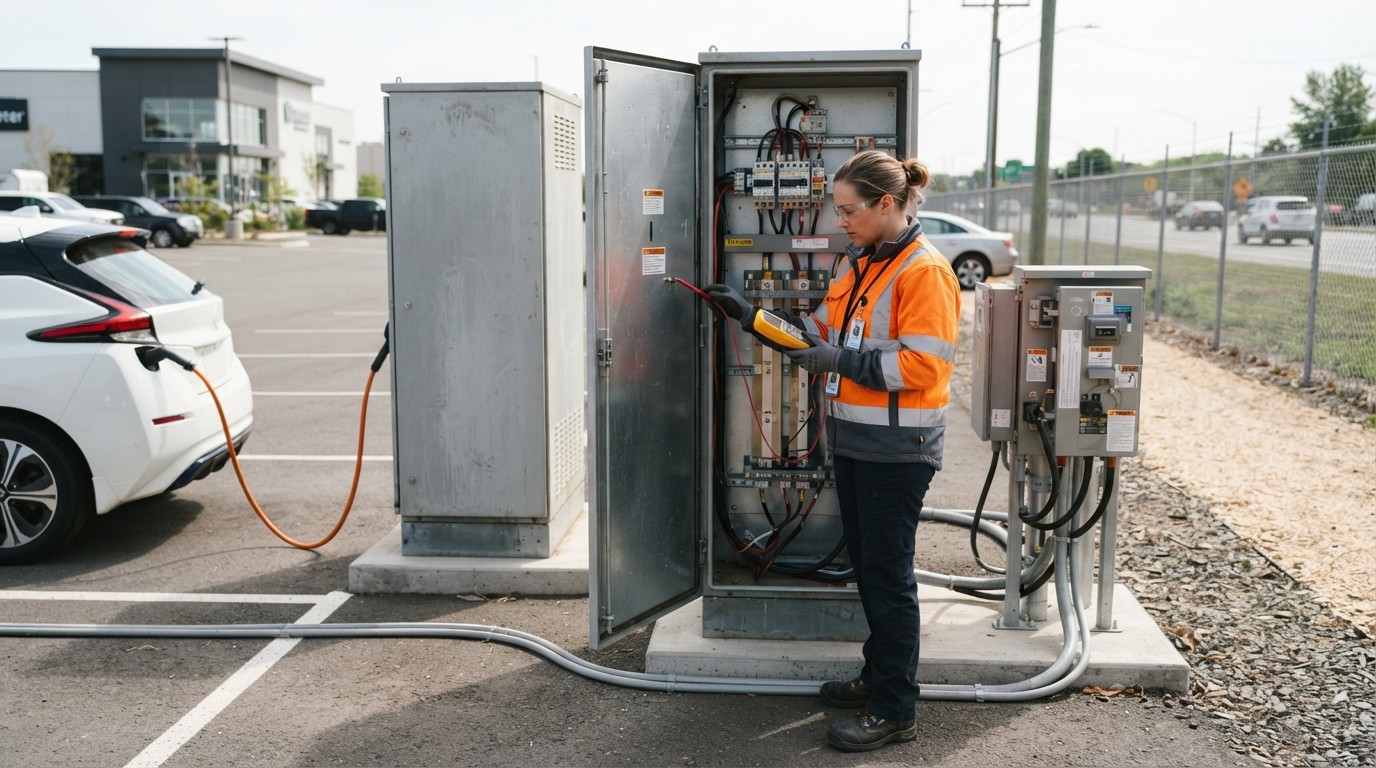
Successful deployment of an electric car charging station begins with site assessment. Commercial buyers should evaluate transformer capacity, service entrance limits, distribution panel space, grounding quality, and cable routing options before installation. The electrical load profile of the site should be analyzed to determine whether upgrades are required.
Load management is often one of the most valuable features in multi-station environments. Instead of allowing all chargers to draw maximum power simultaneously, intelligent control systems distribute available capacity dynamically. This approach helps prevent demand spikes, reduces the need for expensive infrastructure expansion, and maintains stable performance across multiple charging points.
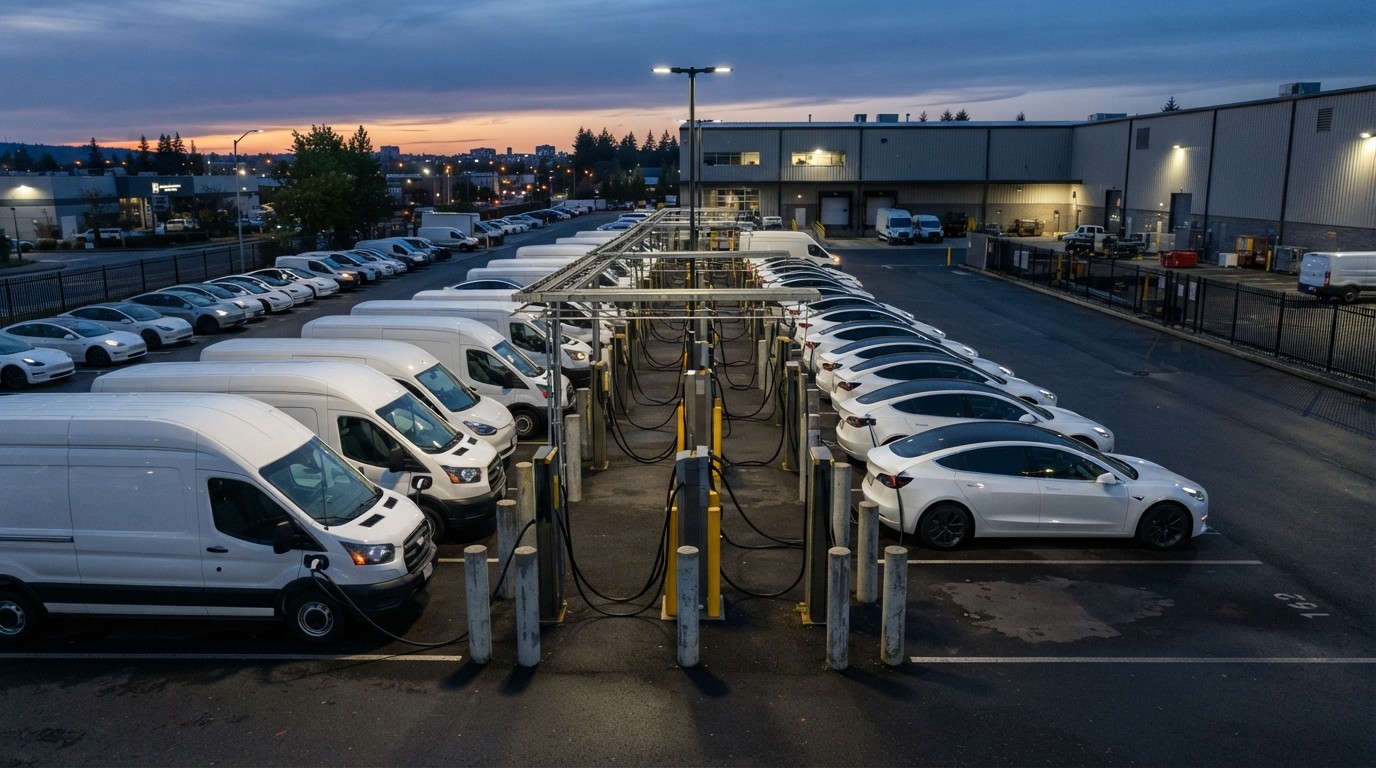
For fleets or large campuses, energy management systems can prioritize charging based on vehicle departure time, battery state of charge, or operational priority. This is particularly useful when multiple vehicles return at the same time and must be prepared for the next shift without overloading the site electrical system.
Installation Considerations for Commercial Buyers
Installation quality has a direct impact on safety, uptime, and user satisfaction. A properly installed electric car charging station should comply with applicable electrical codes, grounding requirements, overcurrent protection standards, and accessibility rules. Buyers should work with installers who understand both the charging hardware and the local electrical environment.
Important installation considerations include cable trenching, pedestal anchoring, ventilation around equipment cabinets, and separation from pedestrian or vehicle impact zones. In indoor facilities, fire safety and smoke management should also be reviewed. In outdoor locations, drainage and water exposure must be carefully managed to prevent long-term damage.
Commissioning is another critical step. Before a station is placed into service, it should be tested for insulation resistance, communication stability, output accuracy, protective relay function, and thermal behavior under load. Commissioning records help establish a baseline for future maintenance and troubleshooting.
Operational Benefits for Different B2B Sectors
An electric car charger can serve a wide range of commercial applications, but the operational value differs by sector. In office environments, charging supports employee retention and tenant services. In retail and hospitality settings, it can extend dwell time and improve customer convenience. In fleet operations, charging infrastructure reduces fuel dependency and supports vehicle readiness. In logistics and delivery operations, predictable charging schedules help stabilize route planning.
For property managers, charging infrastructure can also improve site positioning in competitive rental or development markets. A well-designed charging network demonstrates future-ready infrastructure and can support sustainability goals without relying on vague claims. The key value lies in practicality: a charging station that is dependable, easy to use, and simple to maintain will contribute more than a system that only looks modern on paper.
Maintenance, Monitoring, and Uptime
Maintenance strategy is a major factor in the long-term performance of an electric car charging station. Even robust systems require periodic inspection of cables, connectors, contact surfaces, filters, fans, and protective devices. Dust accumulation, loose terminals, connector wear, and communication faults can all reduce operational efficiency if not detected early.
Remote monitoring significantly improves maintenance planning. Operators can track charging sessions, fault codes, energy consumption, and station availability in real time. Predictive maintenance tools can identify abnormal temperature rise, output instability, or declining component health before a full failure occurs. This reduces downtime and improves service continuity, especially in revenue-generating or fleet-critical environments.
Firmware updates are also important. As network protocols, safety functions, and vehicle communication standards evolve, keeping station software current helps preserve compatibility and security. For large sites, remote update capability saves labor and reduces operational disruption.
Energy Efficiency and Sustainability Considerations
Energy efficiency is increasingly important in commercial charging infrastructure. A high-quality electric car charging station should minimize conversion losses, manage standby consumption, and support intelligent power allocation. Efficient power electronics reduce heat generation, which in turn improves reliability and lowers cooling demand.
Sustainability is not limited to the vehicle itself. Durable station construction, modular repairability, and replaceable components reduce material waste over the product lifecycle. Buyers should consider whether the station supports part-level maintenance, software upgradability, and long service life. These attributes are especially valuable for organizations seeking to manage infrastructure responsibly over many years.
In renewable-integrated sites, charging stations may also be paired with energy storage systems or on-site solar generation. In such cases, the station should be capable of coordinated energy flow management to support peak shaving, self-consumption, and grid-friendly operation.
How to Select the Right Supplier or Manufacturer
For international B2B buyers, supplier selection should go beyond basic product brochures. A strong manufacturing partner should provide clear electrical specifications, thermal performance data, installation documentation, communication protocol support, and quality testing records. The ability to customize enclosure design, cable length, connector configuration, and backend integration can be especially valuable in commercial projects.
Buyers should also ask about quality control procedures during production. Important checks may include component traceability, insulation testing, functional verification, enclosure sealing tests, and thermal burn-in validation. Consistent manufacturing quality reduces field failures and protects the buyer’s project timeline.
Service support matters as well. Spare parts availability, technical documentation, remote diagnostics, and response procedures all affect lifecycle performance. In large deployments, the lowest initial purchase cost is not necessarily the best commercial choice if maintenance support is weak or spare parts are difficult to source.
Conclusion: Building Charging Infrastructure That Performs
An electric car charging station is a strategic infrastructure asset, not just a utility accessory. For commercial buyers, the real value lies in matching station design to use case, ensuring electrical compatibility, and planning for reliability over the full operating lifecycle. The most effective installations combine sound engineering, durable materials, intelligent power management, and practical maintenance support.
As electric mobility continues to expand, businesses that invest in well-specified charging infrastructure will be better positioned to support users, manage energy efficiently, and maintain operational consistency. A technically sound electric car charging station can deliver more than electricity; it can deliver dependable service, predictable performance, and long-term site value.
Post time: Nov-23-2026


