

China Manufacturer of Highway 240kW DC EV Charger
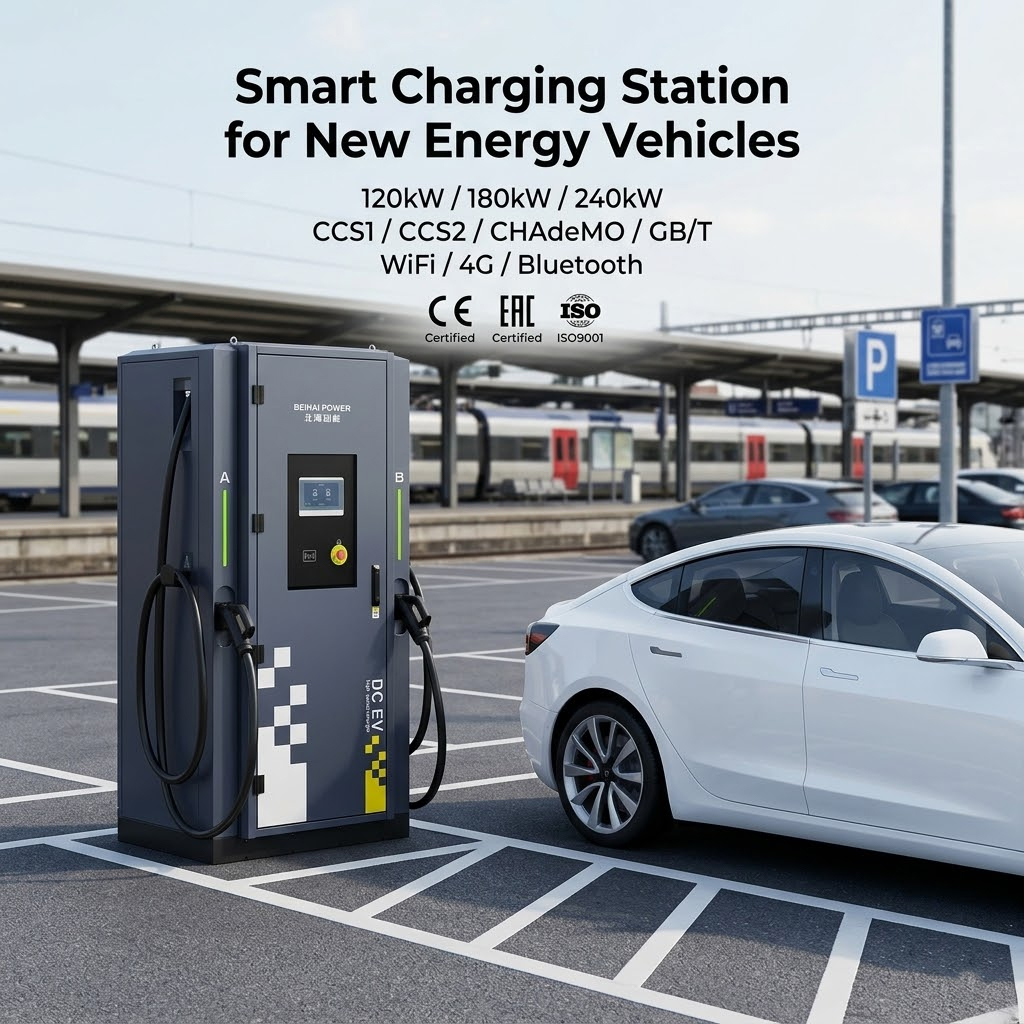
I’m a China-based manufacturer, and I offer the Highway 240kW DC EV Charger tailored for highway corridors and fleet services. This high-power DC charger delivers up to 240 kW per port, enabling rapid top-ups and high device turnover. I designed it for reliability in harsh environments with rugged enclosure, IP-rated, wide temperature range, and modular power modules that can be replaced on-site. It supports CCS and CHAdeMO adapters, multiple connector options, and hot-swappable modules to minimize downtime. Networked via OCPP with Ethernet/4G, it integrates payment, remote diagnostics, and fleet management. Installation and branding are customizable to your site needs; I provide full after-sales support across China and international markets. If you’re a buyer seeking scalable capacity, lower total cost of ownership, and a trusted Manufacturer partner, the Highway 240kW DC EV Charger is built for your charging network.


Highway 240kW DC EV Charger Application Service Backed by Expertise
For global fleets and highway operators seeking reliable ultra-fast charging, our end-to-end application service for 240kW DC EV chargers delivers engineered solutions from site assessment and civil design to commissioning, interoperability testing and long-term maintenance. Backed by deep expertise in power electronics, grid integration and safety standards, we optimize charger placement, grid connections and energy management to maximize uptime and minimize total cost of ownership. We offer multi-protocol compatibility, remote monitoring, OTA updates, spare-parts logistics and scalable rollouts with documented compliance to international certifications and rigorous factory testing. Flexible procurement options, predictable lead times, local partner coordination and dedicated technical support ensure smooth deployment across regions and reliable lifecycle performance.
{ Highway 240kW DC EV Charger Application Service Backed by Expertise}
| Model | Configuration | Max DC Power | Voltage Range (DC) | Max DC Current (approx) | Connector Types | Simultaneous Charging | Typical Use Cases |
|---|---|---|---|---|---|---|---|
| 240-Single | Single-output cabinet, integrated power stage | 240 kW | 200–1000 V DC | Up to ~600 A (depends on voltage) | CCS1 / CCS2, CHAdeMO (adapter), DC output only | 1 vehicle at full rate | Highway fast-charge stops, fleet rapid top-ups, truck-portable installations |
| 240-Dual | Two independent outlets, shared power stage | 240 kW (total) | 200–900 V DC | Each outlet up to ~300 A (dynamic power split) | CCS2, CHAdeMO (with adapter) | 2 vehicles (power managed, e.g., 120+120 kW or 240+0 kW) | High-throughput highway sites, service plazas, fleet depots with staggered loads |
| 240-Modular | Modular racks (scalable), distributed power modules | N× modular 240 kW (scales by adding modules) | 200–1000 V DC (per module) | Per module up to ~600 A; aggregate limited by site supply | CCS2, CHAdeMO, configurable outlets | Multiple vehicles, dynamic load balancing across modules | Large charging hubs, highway plazas, commercial depots requiring future capacity growth |
| Site Power Requirement (typical) | Installation Lead Time | Service & Support (SLA) | Certifications & Protocols | Peak Efficiency | Cooling Method |
|---|---|---|---|---|---|
| 480 V AC 3-phase supply typical; transformer and switchgear sized for continuous 240 kW plus 20% margin; neutral/fault protection and harmonics mitigation recommended | Site assessment to commissioning: 4–12 weeks (site prep, permits, electrical upgrades affect timeline) | 24/7 remote monitoring; preventative maintenance every 6 months; on-site response typically 24–72 hours depending on SLA tier; firmware & security updates included | IEC 61851-23, IEC 62196-3, ISO 15118 (Plug & Charge capable), OCPP 1.6 / 2.0.2 for backend integration; EMC and safety compliance to regional standards | 95%–96% peak (AC->DC conversion, depending on operating point and cooling) | Liquid-cooled power stage and cables (preferred for sustained high power); air-cooled cabinet options for lower duty cycles |
| Site prep: reinforced concrete pad, vehicle circulation clearance, cable routing trenching and bollard protection; optional battery buffer to reduce grid peak demand | Permitting and utility agreement typical add 2–8 weeks depending on jurisdiction | Remote diagnostics reduce on-site visits; field service kits and replacement modules designed for rapid swap to minimize downtime | Supports secure communications and certificate-based authentication (ISO 15118); back-end compatibility via OCPP | Typical station-level efficiency including thermal losses: 92%–95% under mixed load | Hybrid cooling approach available: liquid for cables/power modules + forced-air for cabinet internals |
- Power-splitting logic ensures safe dynamic distribution between multiple outlets to protect site supply and maximize throughput.
- Recommended regular firmware updates and cybersecurity patching to maintain interoperability and safety.
- For optimal throughput on highway sites, consider energy storage co-located to smooth grid demand and reduce utility upgrade costs.
Related Products
Floor-Mounted Charging Stations 240KW Electric Car Chargers with CCS2 / Gbt Charging Ports DC EV Charger for Electric Car
Read More


Highway 240kW DC EV Charger Supplier in 2025
Top Selling Products




- Related Blog
- Reviews

-

Phone
-

E-mail
-

Whatsapp
-

Top