
Commercial EV Charging Station Buying Guide: 6 Essential Questions Every B2B Buyer Should Ask
As global electric vehicle adoption accelerates, commercial properties, fleet operators, and Charge Point Operators (CPOs) are rapidly investing in charging infrastructure. However, selecting the right hardware and deployment partner involves balancing technical specifications, installation budgets, and long-term scalability.
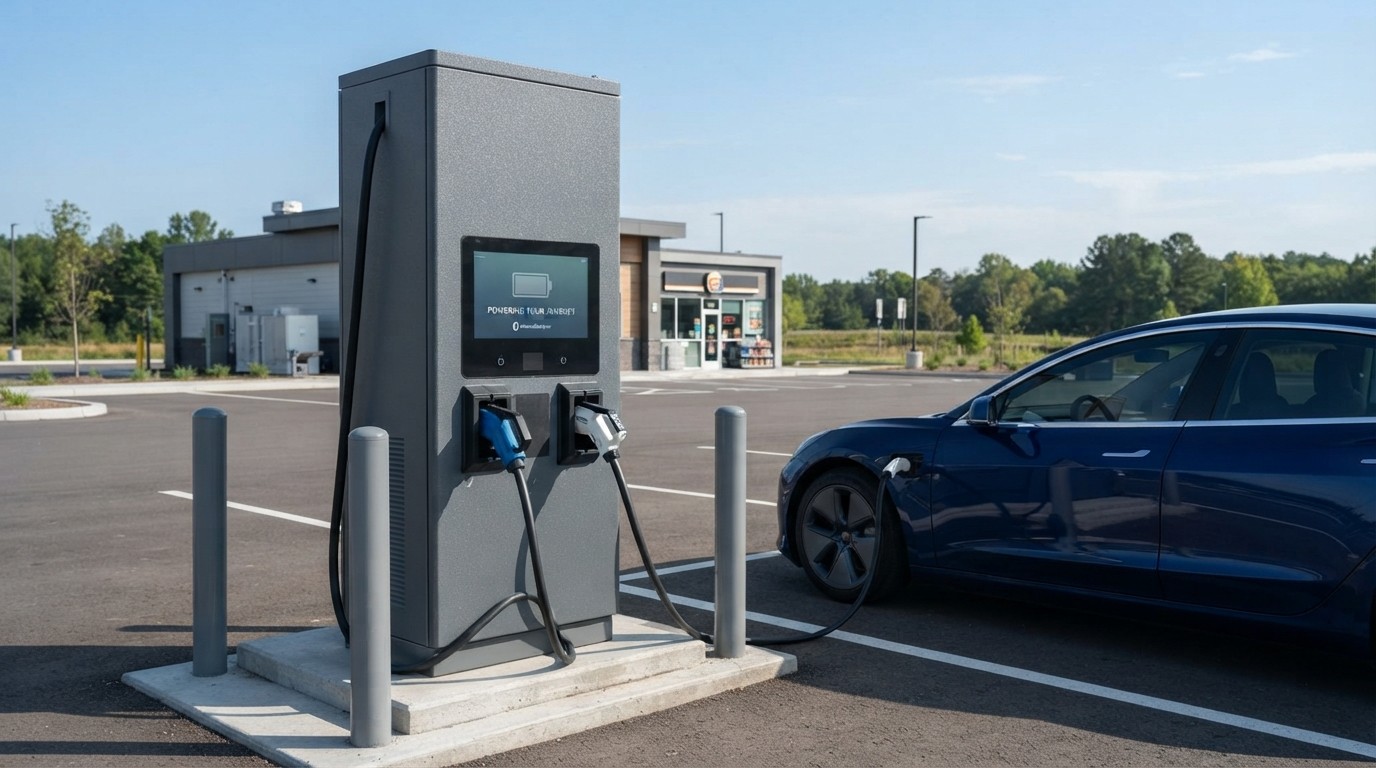
To help B2B buyers make informed procurement decisions, the engineering and international project team at CHINA BEIHAI POWER has compiled answers to the six most frequently asked questions regarding commercial EV charging stations.
Key Takeaways for B2B Buyers:
Match Power to Dwell Time: Use AC chargers (7kW–22kW) for long-dwell parking (workplaces/hotels) and DC fast chargers (60kW–480kW) for high-turnover commercial hubs and fleets.
Prioritize Smart Protocols: Ensure OCPP 1.6J/2.0.1 compatibility and Dynamic Load Balancing (DLB) to avoid costly electrical grid upgrades.
Look Beyond Hardware Price: Factor in site civil works, OEM customization capabilities, and certified after-sales support for the lowest Total Cost of Ownership (TCO).
Q1: What should B2B buyers look for when choosing an EV Charging Station for commercial use?
A: When buying an EV Charging Station for a commercial site, B2B buyers should focus on charging speed, connector compatibility, durability, and ease of management.
First, confirm whether the station supports the vehicle types most likely to use it, including AC or DC charging options and regional plug standards (such as CCS1, CCS2, NACS, GBT, or Type 2). Next, consider the site’s traffic flow: workplaces, retail centers, hotels, and fleet depots require different charging outputs and port configurations. Buyers should also evaluate load management features, network connectivity (4G, Wi-Fi, Ethernet), and OCPP-compliant software tools for access control, usage tracking, and remote monitoring.
For outdoor installations, look for weather-resistant enclosures (IP54/IP65) and comprehensive electrical safety protections. Finally, review warranty coverage and long-term maintenance requirements.
-
The BEIHAI POWER Advantage: Whether you need compact wall-mounted AC units or high-power BHDC Series DC Fast Chargers (20kW to 480kW), BEIHAI POWER engineers commercial-grade chargers designed to balance high performance, modular scalability, and optimal Total Cost of Ownership (TCO).
Q2: How do I compare different EV Charging Station models for my business?
A: To compare EV Charging Station models effectively, start with charging power and expected dwell time. A lower-power AC unit works well for all-day workplace or overnight hotel parking, while a high-power DC fast-charging model is essential for commercial fleets, highway corridors, and high-turnover retail areas.
Next, compare the number of charging guns (single vs. dual-port simultaneous charging), cable length, cooling methods, and mounting styles (wall-mounted vs. pedestal). If your business requires monetization and reporting, prioritize smart software features such as RFID access, mobile app integration, POS payment terminals, and real-time energy reporting.
-
The BEIHAI POWER Advantage: Our product matrix covers the full spectrum of commercial scenarios—from space-saving 20kW–40kW compact DC wallboxes to 120kW–240kW dual-gun floor-standing chargers and 480kW liquid-cooled split superchargers—allowing you to standardize your hardware across multiple sites with unified backend management.
Q3: What installation factors affect the total cost of an EV Charging Station project?
A: The total cost of an EV Charging Station project extends well beyond the initial hardware price. Key installation factors include available electrical grid capacity, trenching, cable routing, mounting civil works, networking, local permits, and site preparation.
If your facility already has sufficient electrical capacity, deployment is straightforward. However, if power upgrades are required, costs can increase due to main panel modifications, transformer additions, or extensive conduit runs. Parking lots, underground garages, and curbside locations each present unique engineering challenges. Additionally, software onboarding for payment gateways and cloud monitoring should be factored into the budget.
-
How We Help Lower Costs: To prevent unexpected budget overruns, BEIHAI POWER provides pre-sale technical consultation, site layout guidance, and Dynamic Load Balancing (DLB) solutions that intelligently distribute existing building power—often eliminating the need for expensive transformer upgrades.
Q4: Can an EV Charging Station be customized for branding and business operations?
A: Yes. Modern commercial EV Charging Stations can be deeply customized to reinforce brand identity and align with specific business models.
From a hardware perspective, customization includes custom chassis colors, corporate logo placement, branded LCD UI screens, and tailored welcome interfaces. From an operational standpoint, chargers can be configured with custom access permissions, tiered pricing rules, and fleet scheduling. For instance, a corporate campus may require free employee RFID authentication, whereas a public CPO requires seamless guest payment and automated billing.
-
The BEIHAI POWER Advantage: As a direct manufacturer integrating R&D and production, BEIHAI POWER offers flexible OEM & ODM customization. From custom enclosures and localized multi-language interfaces to deep OCPP protocol integration with your existing CMS platform, we tailor every detail without compromising delivery lead times or warranty coverage.
Q5: How do I choose the right supplier for an EV Charging Station order?
A: Choosing the right supplier requires looking beyond unit pricing to evaluate manufacturing reliability, international certifications, and proven commercial project experience.
A trustworthy supplier should understand diverse B2B applications and provide verified compliance certifications (such as CE, RoHS, and regional grid standards). Buyers should inquire about spare parts availability, remote diagnostic capabilities, technical documentation, and after-sales response times. If you plan to scale across multiple locations, verify the supplier’s production capacity for volume orders and phased rollouts.
-
Why Global Partners Trust BEIHAI POWER: With successful commercial deployments across Europe, North America, Central Asia, the Middle East, and Latin America, CHINA BEIHAI POWER provides end-to-end B2B support—including factory testing videos, clear warranty terms, spare parts kits, and dedicated engineering assistance from commissioning to daily operation.
Q6: What features help an EV Charging Station perform well in a commercial environment?
A: In high-traffic commercial environments, an EV Charging Station performs best when it combines industrial durability, intelligent power control, and a frictionless driver experience.
Essential features include ruggedized enclosures, wide operating temperature tolerance (-30°C to +55°C), high power conversion efficiency (≥95%), and multi-layered safety protections (over-voltage, short-circuit, leakage, and surge protection). For operators, remote OTA (Over-The-Air) firmware updates and real-time fault diagnostics are critical to maximizing charger uptime. For drivers, high-brightness touchscreens, intuitive instructions, and ergonomic cable management ensure a smooth charging session.
Ready to Plan Your Commercial EV Charging Project?
Whether you are launching a public charging network, electrifying a commercial fleet, or adding EV amenities to your property, CHINA BEIHAI POWER delivers reliable, scalable, and cost-effective charging infrastructure tailored to your market.
Post time: Nov-23-2026


