
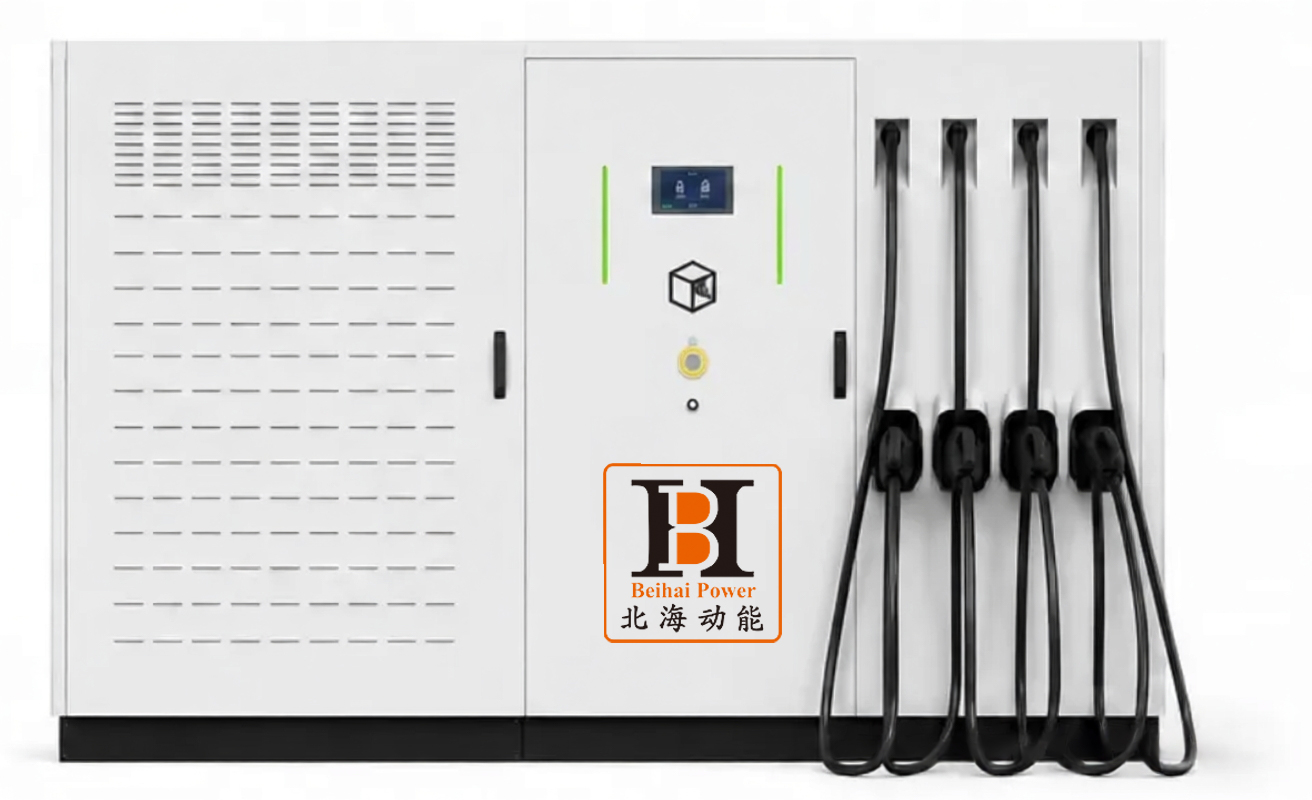
“Energy storage experts lack EV charging know-how; EV charging experts avoid energy storage.”
— This has long been a defining fracture in the new energy industry.
Energy storage companies excel at battery packs, BMS, and energy management, yet they often lack expertise in charging station operations, vehicle protocol compatibility, and power output nuances. Conversely, charging station manufacturers master vehicle communication protocols and charging control logic, but frequently fall short in core energy storage areas like battery modularization, thermal management, and comprehensive system integration.
Our mobile energy storage charging station breaks down these barriers.
We don’t just build EV chargers; we build packs. From cell selection and module design to system integration, and from charging control algorithms to vehicle protocol adaptation, everything is 100% self-developed and produced in-house. These two “hardcore” technologies have been deeply fused by a single team on a single production line.
In simple terms, it is the integration of an energy storage battery system and an intelligent EV charger into a single, mobile unit.
Unlike traditional fixed chargers that are tethered to a specific parking spot, or standard energy storage cabinets with limited functionality, this is a flexible “mobile energy hub“—capable of storing, charging, and discharging energy on demand.
What truly sets it apart is its ability to deliver superior performance and versatility in both grid-tied and off-grid operating modes.
In grid-connected operation, our mobile energy storage charging station functions as a comprehensive, all-in-one solar-storage-charging system.
Peak Shaving and Cost Optimization:
The system intelligently manages energy consumption to lower costs. During off-peak hours when electricity prices are low, the system automatically draws power from the grid to charge the internal batteries. During peak charging hours, it prioritizes discharging the stored energy to charge vehicles. This approach bypasses transformer capacity limitations while significantly reducing electricity expenses.
Plug-and-Play Solar Integration:
Our equipment features built-in ports for seamless photovoltaic (PV) integration. When sunlight is available, the system prioritizes green solar energy for charging. If solar output is insufficient, the energy storage system takes over, and the grid acts as a final safety net. This creates a fully autonomous “Solar Generation — Storage Regulation — Charging Output” green energy loop.
Universal Compatibility, Instant Charging:
Leveraging our deep expertise in the EV charging sector, we have mastered the communication protocols for the vast majority of new energy vehicles on the market today. Whether it is a passenger vehicle or a commercial truck, simply plug in and charge—no additional configuration or adapters required.
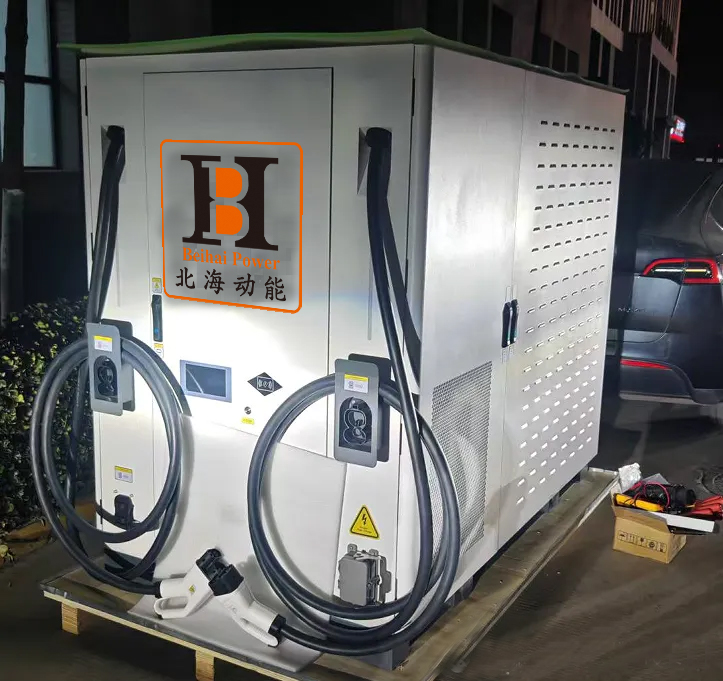
Function 1: Self-Recharging via External Chargers
In off-grid mode, the device can use its own charging port to draw power from external sources—such as existing ev charging stations or other charging piles—to replenish its internal battery system. What does this mean? It means this device can “fully recover” without needing a direct grid connection. In remote construction sites, temporary events, or emergency rescue scenarios where the grid is unavailable, as long as there is an external power source, the unit can “refuel” itself and continue to provide energy to others.
Function 2: EV Charging
This is our core capability. When off-grid, the energy stored in the batteries is output via the charging port to provide DC fast-charging for new energy vehicles. A single unit effectively functions as a mobile fast-charging station.
Function 3: Three-Phase AC Power Output
Beyond charging vehicles, our mobile energy storage charging station features a three-phase AC power output. This enables it to function as a 380V or 220V three-phase emergency power supply.
One device, three identities: a smart charger, an energy storage cabinet, and an emergency power supply—switching seamlessly to meet your needs.
Returning to our initial question: Why is it that in today’s market, energy storage companies rarely touch EV charging, and charging pile manufacturers avoid energy storage?
The core of energy storage lies in the “Battery.”
Cell selection, consistency management, thermal runaway protection, and cycle life optimization—these require deep-seated expertise in PACK manufacturing. A single overlooked detail can lead to rapid capacity degradation or, more seriously, critical safety hazards.
The core of EV charging lies in “Interaction.”
Vehicle identification, protocol handshaking, dynamic power adjustment, and charging safety assurance—these require years of cumulative experience in charging control algorithms and extensive real-world vehicle testing. If the protocols do not match, the vehicle won’t charge; if the algorithms lack precision, the charger will frequently “trip.”
At China Beihai Power, we stand firmly on both fronts.
We operate our own PACK production lines. From incoming cell inspection to module welding and system integration, every step of the process is self-developed and under our total control. Our battery packs feature an IP67 protection rating and are equipped with an active fire suppression system, ensuring safety from every angle.
We maintain our own EV charging R&D team. We have self-developed our SECC (Supply Equipment Communication Controller) and OCPP platforms, achieving a 100% charging compatibility rate.
Energy storage and charging are not “pieced together” by two separate departments; they are deeply integrated by a single, unified team. From BMS to charging control, and from thermal management to power distribution, everything is scheduled and managed by one cohesive system. You won’t face the frustration of mismatched interfaces or the headaches of conflicting communication protocols.
The market for mobile energy storage charging is exploding. The global mobile energy storage vehicle market has already surpassed $60 billion, with projections to exceed $100 billion by 2027. With government policies worldwide actively incentivizing “off-grid” energy storage projects, the industry has reached a critical tipping point.
In this arena, energy storage experts often lack the capability for EV charging, while charging pile manufacturers shy away from energy storage integration—but we have mastered both.
If you are seeking an all-in-one mobile energy storage charging solution that excels in grid-tied scenarios, supports self-recharging in off-grid modes, and functions as a versatile mobile power station, we invite you to connect with us.
Post time: Jun-25-2026


