
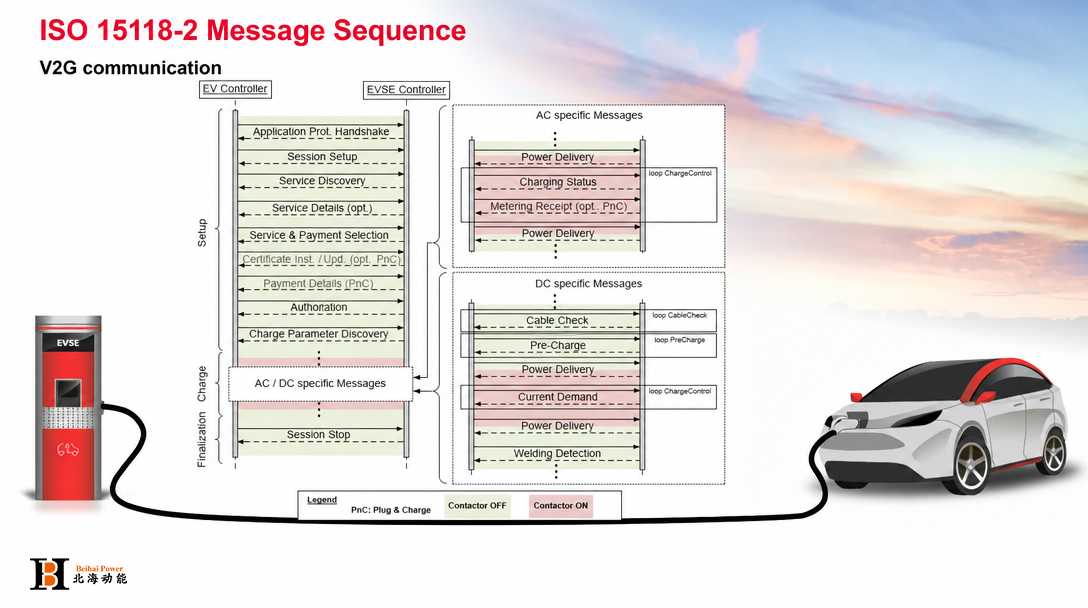
In this article, we describe the electric vehicle (EV) charging procedures defined in ISO/IEC 15118 and related standards.
For the sake of brevity, we focus on the direct current (DC) charging process.
The figure below illustrates the overall EV charging process, with relevant standards indicated in parentheses.
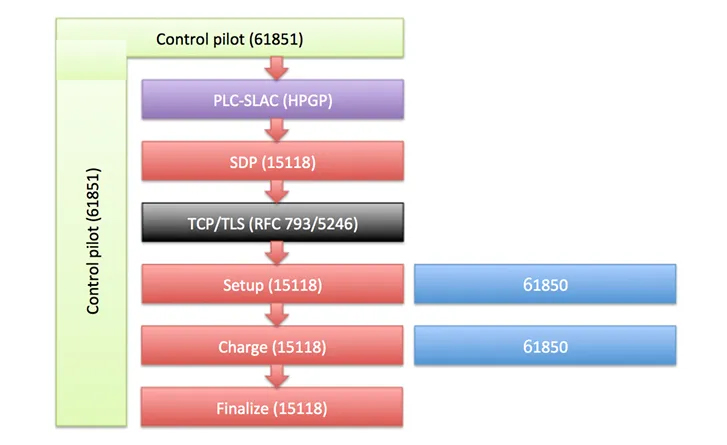
At this stage, the electric vehicle (EV) and the electric vehicle supply equipment (EVSE) can safely exchange TCP packets to control the charging process.
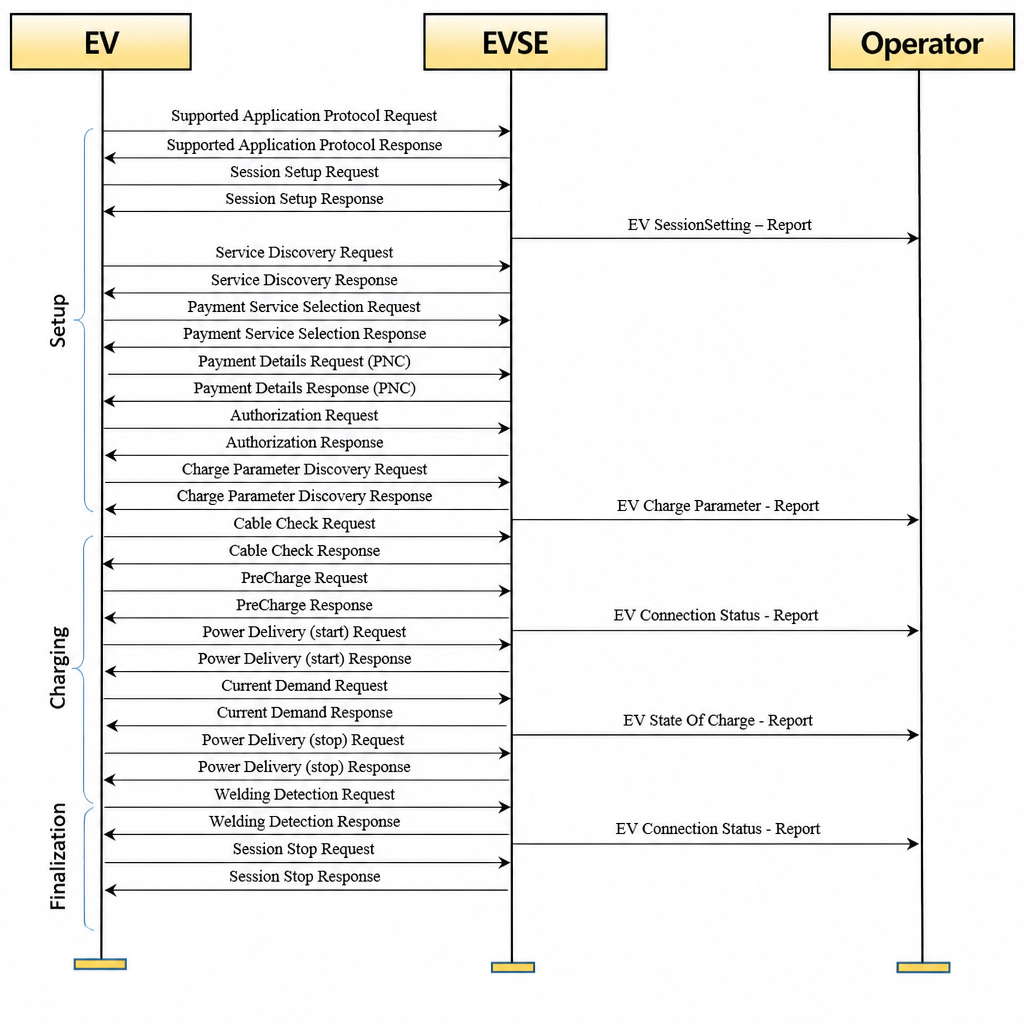
The procedure consists of three phases: setup, charging, and finalization. During the setup phase, the EV and EVSE negotiate various parameters, including protocol versions, user identity, service information, payment methods, and billing parameters. In the charging phase, energy is physically transferred from the EV charger to the EV. Throughout the transfer, they continuously exchange status information until termination conditions are met or an interruption is requested for any reason. During finalization, they perform safety checks before disconnecting.
Throughout the communication process, the EVSE reports on the charging process to the operator. Interactions between the EVSE and the operator are not well-defined in existing standards; however, IEC 61850-90-8 describes an information model for data exchange between the EVSE and the operator.
Post time: Sep-18-2026


